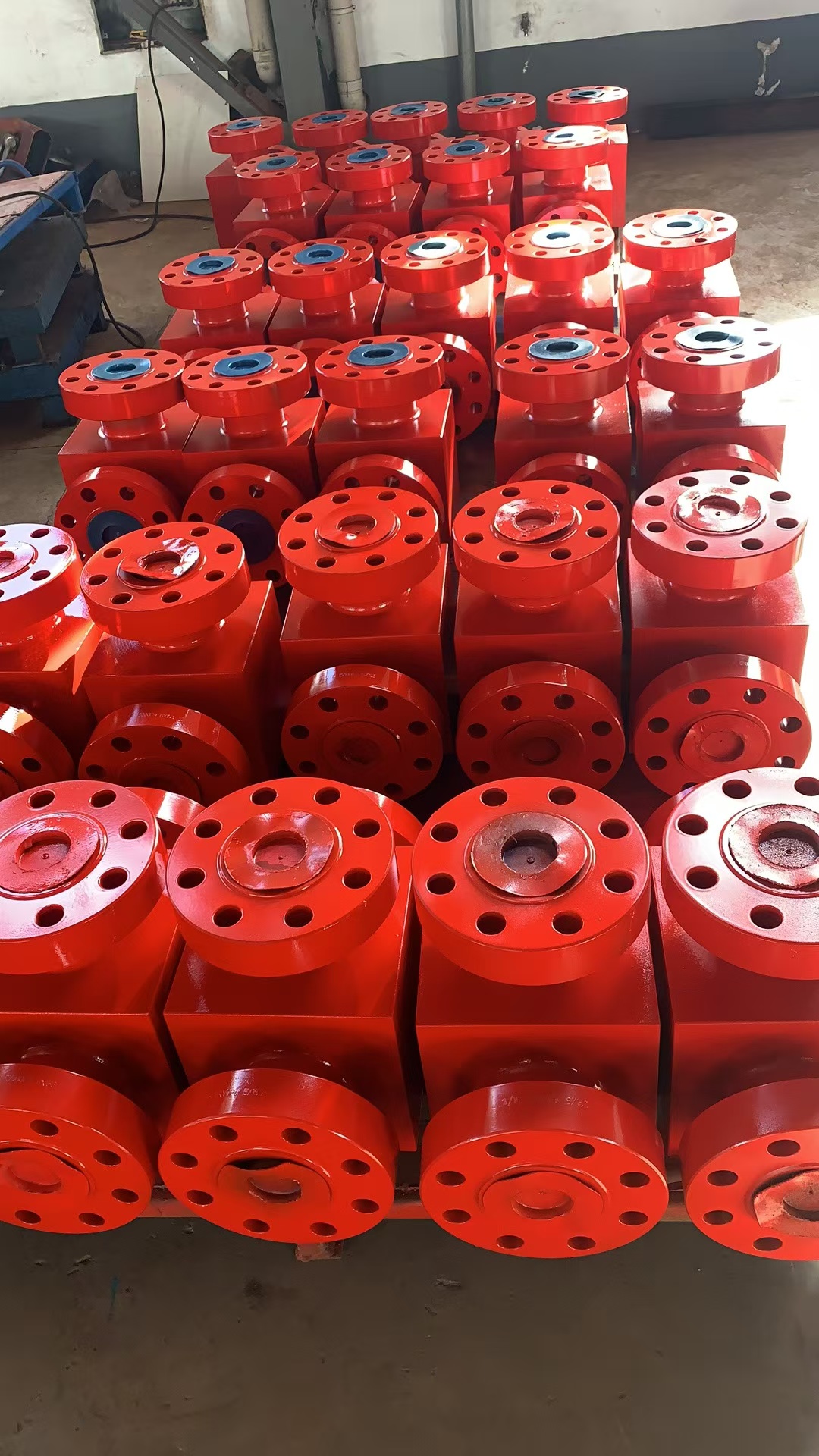


1. Basic Definition and Functions
A tee is a pipe fitting, shaped like a "T," used to connect pipe branches in three directions.
In petroleum machinery, it is mainly used to split or combine fluids (such as crude oil, natural gas, or drilling fluid), helping to optimize the flow direction and pressure control of the pipeline system.
Core functions include: reducing pipe connection points, improving system efficiency, and ensuring the stability and safety of fluid transmission.
2. Main Application Scenarios
Oil Drilling: In drilling equipment, it is used to connect mud pumps, drill pipes, etc., to achieve the circulation and distribution of drilling fluid.
Oil Pipelines: Used in long-distance pipeline systems for branching to transport or collect oil, adapting to terrain changes or equipment connection requirements.
Refineries and Processing Equipment: Used in refining processes to connect reactors, storage tanks, etc., handling high-temperature, high-pressure fluids.
These scenarios emphasize pressure resistance and corrosion resistance to withstand the harsh environment of the oil industry.
3. Key Product Characteristics
Materials: Commonly made of high-strength materials such as carbon steel, stainless steel, or alloy steel to resist the corrosiveness and high pressure of oil fluids.
Standards and Specifications: Complies with industry standards (such as API 5L or ANSI B16.9) to ensure that dimensions, pressure ratings (such as Class 150 to Class 2500), and sealing performance meet safety requirements.
Design Features: Includes welded or threaded connection methods and surface treatments (such as galvanizing or coating) to enhance durability and ease of installation.
4. Common Types and Selection
Equal Diameter Tee: All three ports have the same diameter, suitable for uniform flow distribution.
Differentiating Tee: Ports have different diameters, used for flow regulation or connecting pipes of different sizes.
When selecting a tee, fluid type, operating pressure, temperature, and environmental factors must be considered to ensure it matches the overall requirements of the petroleum machinery system.


